
How to Improve iPhone Performance for Gaming
Looking to optimize your iPhone for gaming? Not getting the frame rates you expect, especially in fast-paced games like racing sims or shooters? You’re not alone. A few of us on the team are serious about mobile gaming, and after plenty of trial and error, we’ve found a handful of tweaks that actually make a difference.
Below, we’ve broken everything down into three clear sections, each with three targeted methods. Whether you play casually or push your device to its limits, these steps can help your iPhone deliver the best gaming experience possible.
Clean iPhone Resources for Gaming
Let’s start with the basics—your iPhone’s resources. It sounds simple, but it makes a noticeable difference. If your games take too long to load or the FPS tanks mid-match, it might be because too much is running in the background, or your storage is packed to the brim.
We’ve tested these methods across multiple iPhone models—everything from the 11 and 13 to the 15 and even the latest iPhone 16—and the results are always the same. Clean up your resources, and get a fast and responsive gaming experience on your iPhone.
Method 1: Close Unused Apps
Your iPhone is great at multitasking—but when it comes to gaming, that’s not always a good thing. Apps running quietly in the background can chip away at your device’s memory and CPU power. Now, Apple says iOS automatically manages apps and shuts down what isn’t needed—and that’s true to a point. But in our experience, especially during heavy gaming sessions, manually closing certain apps can still lead to smoother gaming performance. Sometimes, the system just doesn’t move fast enough. So, here’s what you should do:
- Swipe up from the bottom (or double-tap the Home button on older models) to open the app switcher.
- Then swipe up on anything you’re not using. Music streaming apps, maps, Safari tabs, food delivery trackers—shut them down.
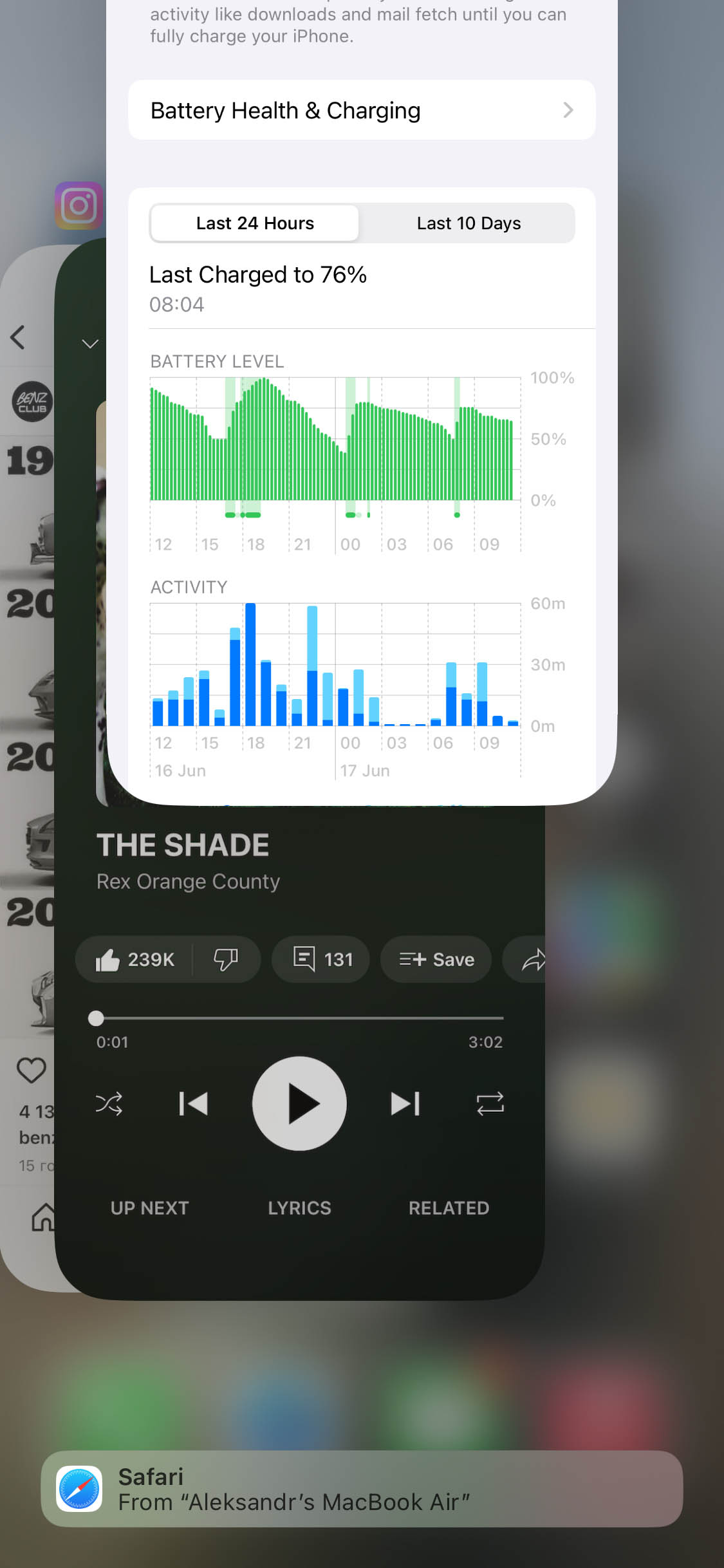
This doesn’t mean you need to obsessively close apps all day long. But when you’re about to jump into a high-demand title—especially something 3D-heavy or online—it’s smart to give your iPhone as much breathing room as possible. Less background noise means more system resources focused where they matter: keeping your iPhone gaming smooth and responsive.
Method 2: Reboot Your Device
Yeah, it sounds old-school—but restarting your iPhone still works. And not in a vague, “try turning it off and on again” kind of way. We’ve seen it firsthand: games that lagged suddenly ran smoother after a simple reboot.
Why? Because restarting clears temporary files, resets RAM usage, and shuts down background processes that may have piled up quietly in the background. Even if you’ve closed apps manually, some system-level stuff can linger. A fresh restart wipes the slate clean.
Here’s the quick way to do it:
- Open Settings > General.
- Scroll down and tap Shut Down.

- Slide to power off.
- Once the screen goes black, hold the power button until the Apple logo appears.
Done. You’re back in business.
We usually recommend rebooting your iPhone if you haven’t done it in a while. It only takes a minute, and the gaming performance boost can be immediate.
Method 3: Clear Internal Storage
Storage isn’t just about how many photos or apps you can fit on your phone—it affects gaming speed too. When your iPhone’s storage is nearly full, it starts to slow down. Apps take longer to open, animations get choppy, and games can feel slow. We’ve seen it firsthand, especially on devices with under 10% free space left. It’s like trying to run a marathon in a cluttered room—nothing flows the way it should.
So what can you actually do? First, check how much space you’ve got left. Go to Settings > General > iPhone Storage.

If you’re running low, it’s cleanup time. Usually, the top space-hogging categories are Apps and Photos, so start there.
Sure, you can go through your apps and delete the ones you haven’t touched in forever (iOS can conveniently sort apps by the date of last launch). Same with photos—tap delete, tap delete again… but who’s got the time? Especially if you’re about to jump into an online game right now. In those moments, you need a quick fix.
That’s where third-party cleaner apps come in.
Some time ago, we ran a full test on the best iPhone cleaner apps and found many great options, but the app that landed at number one for both cleaning potential and speed was Clever Cleaner: AI iPhone Cleaner App. The best part? It’s free.
Not “free with strings attached,” but legit 100% free. No subscription, no paywall, no fake “free trial” stuff, and—believe it or not—we didn’t even spot any ads. We looked. Nothing.
So, what can Clever Cleaner actually clean? Turns out—quite a lot. It comes with four focused cleanup tools:
- First, there’s the Similars tab. This one’s powered by the app’s built-in AI, and it’s surprisingly smart. It can automatically clean up duplicate and near-duplicate photos—including those slightly different shots or your 10 almost-identical selfies. You might be thinking, “Wait, doesn’t the Photos app already have a Duplicates album?” It does, but it’s limited to exact matches only. Clever Cleaner sees what Apple’s built-in tool can’t.

- Then you’ve got the Screenshots tab. This one instantly scans your library for screenshots—memes, receipts, temporary saves, random settings screens—and lets you bulk-delete them in seconds.
- Next is the Lives tab. If you use Live Photos but don’t care about the motion, this tool converts them into regular still images. And trust us, those Live Photos take up a lot more space than you’d think. Turning them into static shots saves tons of storage without deleting anything you want to keep.

- Last up: the Heavies tab. This one’s a favorite. It sorts your media by file size—biggest first—so you can quickly find and delete the true storage hogs, like old 4K videos or massive photo files. Photos app doesn’t show you this kind of breakdown natively, so having it all laid out makes cleanup way easier.
Let’s take a look at the Heavies tab, for example. Here’s how to use it:
- Search for “Clever Cleaner” in the App Store or use this link to download it.
- Launch the app and grant permission to access your Photos library. It’s safe—we checked. The developer, CleverFiles, is a U.S.-based company with over a decade of experience in software. As stated on the official Clever Cleaner cleanup app page, everything is processed locally on your device. Nothing gets uploaded or sent to the cloud, unlike with some other apps.
- At the bottom, select the Heavies tab—this shows your largest videos sorted by size.

- Tap any video to preview it. Swipe through or tap Select All to choose multiple files. The app displays how much space your selected files will clear.
- Tap Move to Trash to send selected files to the trash area.
- Tap Empty Trash at the bottom to finalize the cleanup.

- Open the Photos > Recently Deleted album to remove files permanently and instantly reclaim space.
It’s definitely one of the quickest ways to reclaim storage and give your iPhone some breathing room. If you’ve got around 80% of your storage free after cleanup, you’re in a good spot.
With these three methods, you can minimize performance hitches and keep your iPhone running fast when it matters most—mid-game, mid-fight, mid-drift, you name it. Now that we’ve handled the resource side of things, let’s look into background processes and basic systemwide optimizations to enhance your gaming performance.
Configure iPhone Background Processes for Gaming Performance
Another way to optimize your iPhone for gaming is to adjust a few key system settings. Nothing too deep—just the kind of stuff that often flies under the radar but makes a real difference once you tweak it. These settings control how your device manages power, visuals, and background activity—all things that directly affect gaming performance.
Try these next methods to help prime your device for optimal gameplay:
Method 1: Disable Unnecessary Background Processes
Background tasks might seem harmless, but during gaming, they can quietly pull resources away from what really matters—your game. Things like Bluetooth and Background App Refresh might be doing their job in the background, but they can also create lag, drain battery, or mess with frame rates in heavier titles.
Before launching a game, try to tighten things up:
- Bluetooth. If you’re not using a wireless controller or headphones, turn it off. Go to Settings > Bluetooth and toggle it off.
- Cellular Data. If you’re gaming on Wi-Fi, head to Settings > Cellular and switch off Cellular Data. This prevents apps from running background updates over mobile data.
- Background App Refresh. Apps update themselves in the background—even during gameplay. You can cut that off by going to Settings > General > Background App Refresh. Either switch it off completely, or go down the list and disable it for specific apps you don’t need running while you play.

Individually, these changes might not seem huge—but together, they help focus your iPhone’s power on what you’re actually doing. Less background noise, more consistent gaming performance. It’s a smart way to boost iPhone gaming performance without even touching the game itself.
Method 2: Manage Power Saving Settings
Low Power Mode sounds like a smart idea—and it is, most of the time. It cuts down on background activity, dims your display, and throttles performance to save battery. But that last part is the problem. When you’re gaming, performance matters more than battery life.
Low Power Mode slows down your CPU and limits frame rates. You might not notice it while checking emails or browsing, but during a fast-paced game? It shows.
If your FPS drops for no clear reason, check if Low Power Mode is on:
- You’ll find it under Settings > Battery.
- If Low Power Mode is active, switch it off before you play.
- Alternatively, you can ask Siri to turn it off, or quickly disable it from the Control Center if you’ve added the battery toggle.

The battery might drain faster—but your games will run better on your iPhone. And if you’re plugged in while playing, there’s zero reason to keep power saving on.
Method 3: Adjust Display Settings
Display settings play a major role in your iPhone’s gaming performance. A brighter screen may offer clarity, but it can also generate extra heat and drain battery faster—both of which hurt gameplay. We prefer to dial down brightness just enough to keep the visuals sharp without overloading the system.
- Head to Settings > Display & Brightness.
- Here, lower the brightness to a moderate level, one that does not strain your eyes but reduces energy use.

- On OLED models (The iPhone X, iPhone XS, iPhone XS Max, iPhone 11 Pro, and iPhone 11 Pro Max, as well as iPhones 12 through iPhone 16) you might also consider turning off True Tone or reducing the white point to lessen the processing load. This tweak gives your device more room to focus on rendering games smoothly instead of battling heat and power drain.
With these fine-tuning tweaks to basic system settings, you prepare your iPhone to handle games more efficiently. Less lag, fewer slowdowns, and more consistent performance across the board. These changes take only a few minutes to set up, but the impact can be huge. Especially if you’re playing something demanding, like a competitive shooter or an open-world RPG, your iPhone needs every bit of power available.
Optimize Settings to Make Your iPhone Faster for Gaming
After clearing out storage and tuning system settings, there’s one more layer worth tackling: the software itself. These aren’t background tweaks or hardware hacks—just practical adjustments that directly boost iPhone game performance. If your game feels choppy or slow even after all the usual cleanups, these settings might increase FPS on iPhone and give you that extra edge.
Method 1: Adjust In-Game Graphics Settings
If your game supports custom graphics settings, don’t ignore them—they’re one of the easiest ways to boost iPhone game performance without touching anything under the hood. A lot of modern mobile games now include performance options, and tweaking them can instantly reduce lag and improve frame rates.
Look in the game’s settings menu for terms like Graphics, Frame Rate, Performance Mode, or Battery Saver Mode. Every game labels things a little differently, but the idea is the same: drop the visual effects a notch, and your iPhone doesn’t have to work as hard.

Lower resolution or texture quality might make shadows a little softer or backgrounds less detailed, but you’ll get smoother gameplay in return—especially in games that rely on real-time action. On older iPhones or during long sessions, that trade-off is worth it.
We’ve tested this on everything from Genshin Impact to PUBG Mobile, and every time, the result’s the same: more consistent frame rates and fewer stutters.
If your iPhone struggles with heat, FPS drops, or random lag spikes, this is a great place you look.
Method 2: Reduce Motion
This one lives deep in the Accessibility settings, but don’t let that fool you—it’s a legit way to improve iPhone performance for gaming, especially if your phone feels a little sluggish during gameplay.
- You’ll find it under Settings > Accessibility > Motion.
- Once you’re there, flip on Reduce Motion.

What this does is strip away the fancy animations—things like parallax scrolling, app zooms, and smooth transitions when switching apps. With Reduce Motion turned on, everything feels tighter and faster. You tap, and the system responds instantly. It may not directly increase your iPhone performance, but it cuts down on system overhead—and that can absolutely make your iPhone feel more responsive while gaming.
Method 3: Update iOS and Games
And last but not least—keep your software up to date. It sounds basic, but outdated apps or an old iOS version can quietly wreck your gaming experience. We’ve seen everything from frame drops to full-on game crashes—just because the device missed a few updates.
Start with iOS update:
- Go to Settings > General.
- Tap Software Update and check if a newer version is available.

- If you see the Update Now option tap it.
- Apple regularly pushes performance improvements, especially for newer games or recently released devices. Even a minor update can fix background bugs or optimize how your system handles resource-heavy tasks.
Then head to the App Store, tap your profile icon, and scroll down to see if your games have updates waiting. Developers constantly fine-tune their titles with performance patches, graphics fixes, and bug removals. If a game has been feeling off lately, there’s a good chance an update helps.
Easy way to make games run better on your iPhone. No extra tools, no deep system changes—just regular maintenance. If you haven’t updated in a while, do it now.
What Else Affects iPhone Gaming Productivity?
In conclusion, everything we’ve covered—all the tweaks and adjustments—are, in our experience, the best methods to enhance gaming performance on an iPhone.
These have worked for us in real gameplay. Many racing trophies were won, and more than a few online rivals got crushed. But let’s be honest—you have to stay realistic. No amount of “tuning” is going to turn an iPhone X into an iPhone 16 Pro. These tips can give your device a noticeable gaming boost (and for most people, they’re more than enough), but they’re not magic.
That said, if you still feel like your iPhone’s gaming performance isn’t quite where you want it, there are a few external factors that can make or break your experience.
Let’s start with your internet connection (a huge deal if you’re playing online games with real opponents.) Even if your device is perfectly optimized, a weak or unstable connection can ruin everything. If you’re on Wi-Fi, go for a 5GHz network instead of 2.4GHz (if possible). It’s faster and more stable, especially in crowded areas like apartments or shared spaces. Try to stay close to your router, and if your router is older than your iPhone, it might be time to upgrade.
Prefer mobile data? Make sure you’ve got a strong signal and avoid gaming in spotty areas. 5G or LTE with solid coverage can handle most online games, but the moment your bars dip, you’ll start feeling it—input lag, rubberbanding, or even disconnections. None of that helps you make iPhone games run faster.
Next up: device overheating. This one’s sneaky. You’re deep in a session, the phone starts getting warm, and suddenly everything slows down. That’s thermal throttling kicking in—your iPhone’s way of protecting itself by lowering performance.
- Remove the case when playing for a long time—it traps heat.
Take breaks between sessions to let the phone cool off. - Avoid playing outdoors in direct sunlight (seriously, it heats up fast).
- Use a cooling grip or pad if you game for long stretches—we’ve tried a few that really help.
Finally, if you’ve got tips that worked for you—or you’re still running into performance issues—we’d love to hear about it. Come join us on our online forum here. You can share what’s worked on your end, get advice from us, or pick up extra tips from other readers.
At the end of the day, boosting your iPhone’s gaming performance isn’t just about flipping switches—it’s about knowing your device, your games, and how to get the most out of both.
FAQ
If your iPhone becomes laggy during gaming, try the following steps to improve its performance:
- Close all unnecessary background apps to free up memory.
- Clear up storage space by deleting unused apps and files.
- Update your iPhone and games to the latest version to apply all performance enhancements and bug fixes.
- Consider adjusting the graphics settings within the game to lower quality settings, which can reduce the strain on your device’s hardware.
- Regularly reboot your iPhone to clear the RAM and refresh the system processes.
- Update to the latest iOS and keeping your games updated for improved performance and security.
- Disable background app refresh and reduce motion in settings to lessen the load on your device.
- Set screen brightness to a moderate level and disable auto-lock so your screen doesn’t dim or shut off mid-game.
- Consider using gaming accessories like controllers and high-quality headphones for an enhanced experience.
- Provide a stable internet connection, preferably Wi-Fi, for online gaming.
- Delete unused apps, large videos, and duplicate photos to keep your storage in check. For the best results, aim to have at least 80% free space.
- Regularly reboot your iPhone to refresh its system and clear RAM, and manage storage by removing unnecessary files.
